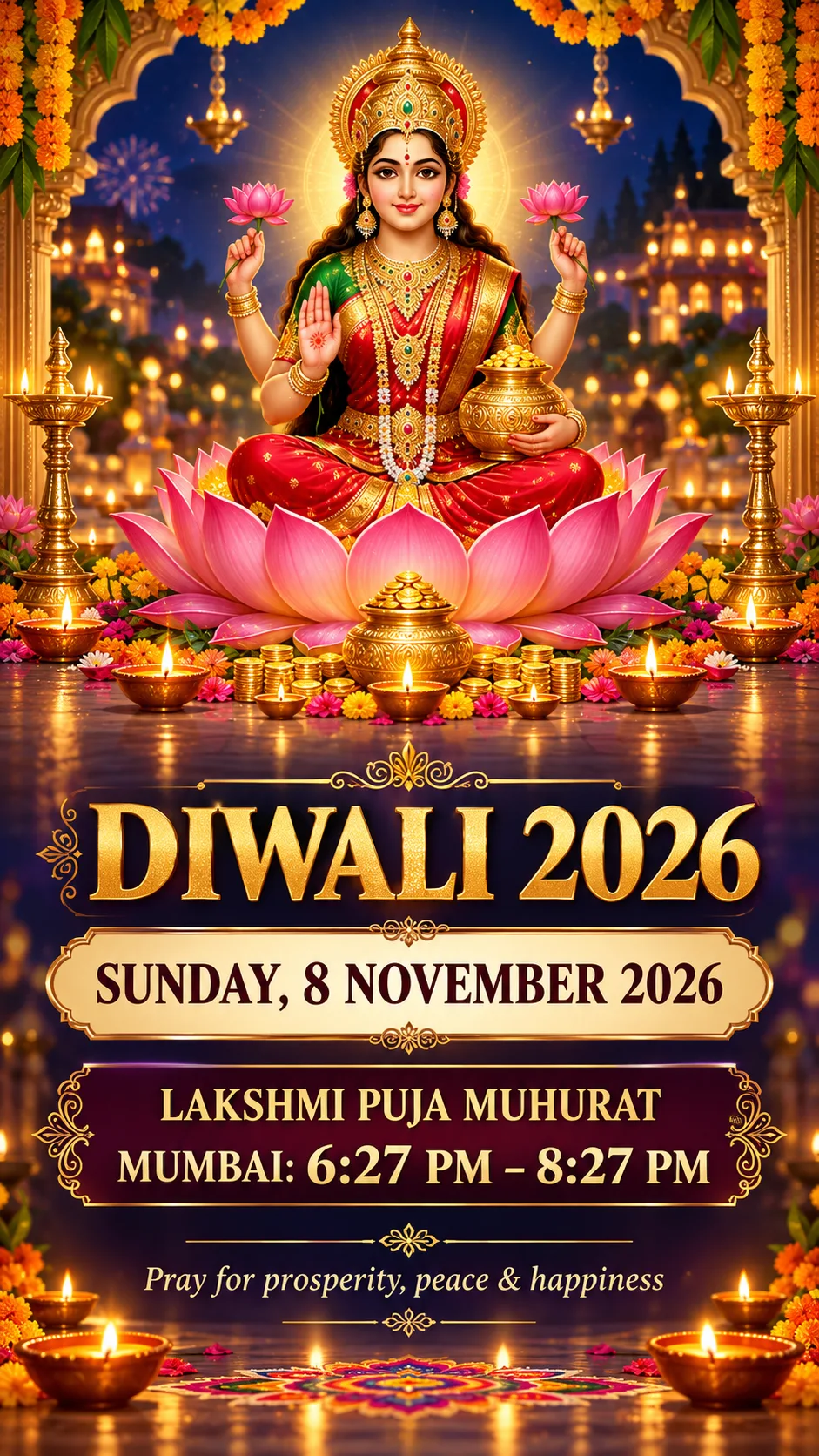
The Diwali 2026 date is expected to be Sunday, November 8, 2026, but confirming the local Panchang is an important step before making firm plans. Lakshmi Puja Muhurat is not a single time that applies everywhere: location, tithi details, and the calendar tradition followed can affect the guidance. This practical guide explains what to verify, how to prepare without relying on unconfirmed timings, and when to organise your messages and greetings. For DilSeWishes readers, it also offers a simple way to make festival wishes thoughtful, timely, and easy to share.
Diwali 2026 Date: What to Confirm First
Many festival calendars list Sunday, November 8, 2026, as Diwali. Treat this as a useful planning date, then confirm it against a trusted Panchang for your location as the festival approaches. Hindu festival dates are tied to the lunar calendar, so the relevant tithi and its timing—not simply the Gregorian date—are central to calendar decisions.
That distinction matters when households coordinate puja, travel, family visits, or time away from work. A date shown in a general online calendar may not explain which regional calendar it follows or how it handles a tithi that begins or ends during the day. Before sharing a date widely, check the calendar’s region and its stated basis.
Build a reliable confirmation routine
Start with a recognised local Panchang or a knowledgeable local source. Check that the entry is specifically for Diwali and Lakshmi Puja, not a date for another observance in the festival period. If two sources differ, compare their location settings and calendar conventions rather than assuming one is automatically correct.
- Confirm the date for your city or region.
- Check the tithi details and the Panchang tradition used.
- Recheck closer to the festival before publishing or forwarding timings.
For a greeting article or WhatsApp status, it is safer to say “Diwali 2026” than to include an unverified puja time. That small editorial choice helps readers celebrate without confusion.
How to Check Lakshmi Puja Muhurat for Your Location
Lakshmi Puja Muhurat refers to a recommended time window for performing worship, as given by a Panchang or the tradition a household follows. It should not be presented as a universal clock time. Location-specific sunrise and sunset calculations, tithi timings, and the method used by the calendar can all affect the window shown. For that reason, a time copied from a city-specific calendar may not suit someone celebrating elsewhere.
Use the details, not just a search snippet
When checking a Muhurat, make sure the source names the city or region and clearly labels the occasion. Read the full entry for its time zone and any notes about the applicable tithi. A headline or search result that displays a single time without context is not enough to plan around. If you follow family or community guidance, compare the published calendar with that practice and ask a trusted source when something is unclear.
For a practical household plan, write down the confirmed window, then allow time beforehand to prepare the prayer space, arrange offerings, and gather family members. Avoid building the evening around a time copied from another location.
DilSeWishes can support the celebratory side of the day with greetings and messages, but a wishes page is not a substitute for a Panchang. Keep informational copy clear: give the expected date, explain that Muhurat varies, and direct readers to verify local details. This protects trust while still helping people get ready.
Diwali Planning Checklist: Dates, Timings, and Messages
Once you have checked the date and local Muhurat, turn the information into a simple plan. Families may be balancing travel, shopping, cleaning, puja preparations, and messages to relatives. A short checklist reduces last-minute uncertainty, especially when people are celebrating in different cities. Keep confirmed facts separate from items that still need checking, and update the plan when a reliable local calendar becomes available.
A quick reference before you make plans
| What to check | Why it matters | Practical next step |
|---|---|---|
| Expected festival date | Helps coordinate the broad celebration plan | Confirm the date in a local Panchang |
| Lakshmi Puja Muhurat | Recommended timing can differ by location and calendar method | Use a city-specific, clearly explained source |
| Travel and family plans | Relatives may be following different schedules | Share the confirmed plan and allow for travel needs |
| Digital greetings | Messages are more useful when sent at a suitable moment | Draft wishes in advance and check details before sharing |
For digital publishing, create a small verification workflow: draft the date-led content, check the calendar source, review location references, and then schedule social posts. Avoid putting a precise Muhurat in artwork if it has not been confirmed for the audience’s region.
Prepare a few greeting styles too: a warm family message, a respectful note for colleagues, and a short WhatsApp status. This makes it easier for readers to choose language that fits the relationship rather than forwarding the same generic line to everyone.
Share Thoughtful Diwali Greetings Without Confusion
Festival information and festival expression work well together when each has a clear purpose. Readers may first look up the Diwali 2026 date, then want a message to send to family, friends, neighbours, or colleagues. Keep practical details distinct from greetings: a puja-time note should be checked for accuracy, while a personal wish should sound sincere and suit the recipient.
Choose a message for the relationship
For family, a warm wish can focus on togetherness and a peaceful celebration. For colleagues, choose a courteous greeting that is inclusive and professional. A short status can be more personal or reflective, but avoid presenting a quotation as a famous saying unless its source is known. When writing in Hindi, use natural Devanagari and check spelling before sharing an image or caption.
Before forwarding a festival card, review its date, spelling, and any timing printed on it. If a graphic includes a Muhurat, make sure it is clearly intended for the right location or omit the time. This is a simple way to keep a greeting helpful rather than inadvertently misleading.
DilSeWishes offers Hindi and English wishes, quotes, and shareable message ideas for occasions like Diwali. Browse for a starting point, then personalise the wording with a name, a memory, or a sentiment that feels true to your relationship. Save a favourite message for later, and share it when it feels right. A thoughtful note—paired with locally verified festival details—can help make the celebration feel more connected.
Conclusion
Diwali 2026 is expected on November 8, but confirm the date and Lakshmi Puja Muhurat with a reliable Panchang for your location before fixing plans or publishing exact timings. Check the calendar’s region and method, then coordinate family arrangements and greetings with care. Keep date information distinct from personal wishes, and review any timing printed on a shareable image. When you are ready to send a thoughtful note, explore Hindi and English festival wishes on DilSeWishes, save your favourite messages, and share them with loved ones.
Related Articles
- 100+ Good Morning Prayer Messages to Share Today
- Long Good Morning Paragraphs for Her to Feel Loved
- 100+ Sweet Good Morning Messages for Your Wife